
The enduring partnership between humans and dogs in hunting traces back millennia, predating agriculture itself. Modern hunting dogs remain indispensable companions for enthusiasts, prized for their innate prey drive, trainability, endurance, and athletic prowess. Selecting the right breed hinges on the specific game and environment, with distinct categories excelling in particular roles. Ensuring their safety through rigorous training, protective gear, and proper nutrition is paramount for any responsible hunter.
🐕🦺 Types of Hunting Dogs
Hunting dogs are meticulously categorized based on their specialized skills and prey:
-
Bird Dogs (Gun Dogs): Primarily hunt birds but may pursue smaller game like rabbits. They locate, flush out, or retrieve downed birds for the hunter.
-
Pointers: Freeze and point their nose toward hidden birds. Example:
 :strip_icc():format(webp)/pointer-sniffing-for-prey-521397346-5bd88a7fc9e77c00518ff4f6.jpg)
 -
Flushers: Make birds take flight so hunters can shoot.
-
Retrievers: Retrieve downed birds, often from water.
-
-
Scent Hounds: Track prey using their powerful sense of smell, often vocalizing during the chase. Some specialize in "treeing" prey.
- Example: :strip_icc():format(webp)/beagle--3-years--running-across-the-meadow-and-sniffing--north-rhine-westphalia--germany-990024704-5bd88839c9e77c0051ae8a03.jpg) (Beagle - excels with rabbits)
-
Curs: Skilled at herding and treeing game, forcing prey up trees for easier capture.
-
Terriers: Tenacious hunters of small burrowing animals, utilizing their strong prey drive and ability to dig.
🏆 Prominent Hunting Dog Breeds
Here's a look at some of the most capable and popular hunting breeds:
-
Labrador Retriever: The quintessential gun dog. Renowned for duck hunting, cold water tolerance, and swimming ability. Highly trainable, energetic, and exceptionally friendly.
:strip_icc():format(webp)/best-hunting-dogs-4177817-final2-e5ce18a1cb45470ea86b5572a03b23e7.png)
| Group | Height | Weight | Temperament | Coat | Lifespan |
|---|---|---|---|---|---|
| Sporting | 21-24 inches | 55-80 lbs | Active, Friendly, Loyal | Dense, short double coat (Yellow, Chocolate, Black) | 10-12 years |
-
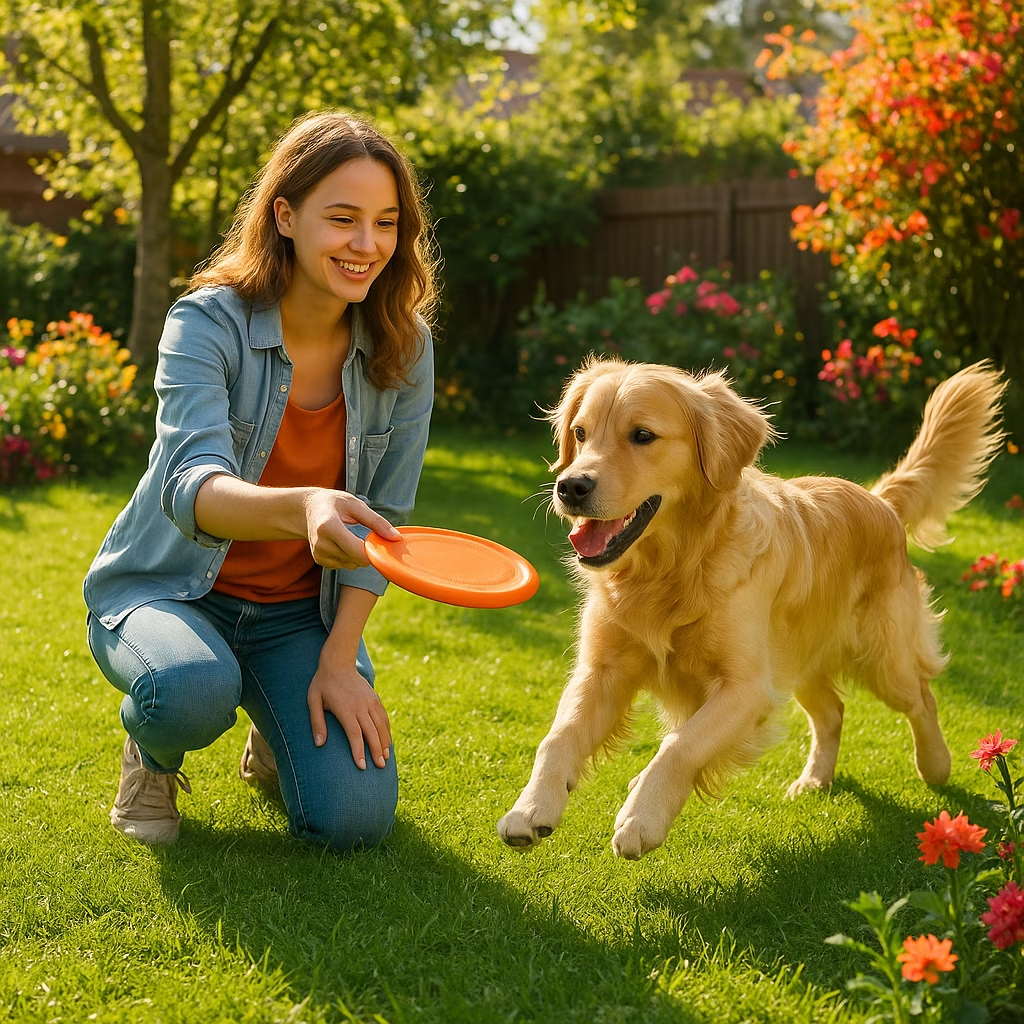
Golden Retriever: Another top-tier gun dog, excellent for birds and small game. Enthusiastic, loyal, highly trainable, and wonderful family companions requiring ample activity.
:strip_icc():format(webp)/breed_profile_goldenretriever_11117969_recirc_055-68ad059b02b94a899667f27d7a8a10e0.jpg)
| Group | Height | Weight | Temperament | Coat | Lifespan |
|---|---|---|---|---|---|
| Sporting | 21-24 inches | 55-75 lbs | Friendly, Loyal, Intelligent | Medium-length double coat (Gold) | 10-12 years |
-
German Shorthaired Pointer (GSP): A versatile, athletic breed excelling in tracking, pointing, and retrieving. Friendly, intelligent, energetic, and eager to learn, though their strong prey drive may be problematic with small pets.
:strip_icc():format(webp)/german-shorthaired-pointer-bird-dog-breeds-422d160a836243bab749e837c1f404a2.jpg)
| Group | Height | Weight | Temperament | Coat | Lifespan |
|---|---|---|---|---|---|
| Sporting | 21-25 inches | 45-70 lbs | Bold, Active, Intelligent | Short, thin (Liver, Liver/White, Roan) | 12-14 years |
-
Bluetick Coonhound: A determined scent hound capable of pursuing and treeing diverse game, even larger animals like cougars. Known for their distinctive calls, high energy, excellent nose, and affectionate nature in active homes.
:strip_icc():format(webp)/blue-tick-hound-470770201-5bd8879a46e0fb00837a71cc.jpg)
| Group | Height | Weight | Temperament | Coat | Lifespan |
|---|---|---|---|---|---|
| Hound | 21-27 inches | 45-80 lbs | Affectionate, Vocal, Sweet | Smooth, short (Blue Ticked) | 11-12 years |
-
Brittany: A tireless and intelligent bird dog, deeply devoted to their family. Prone to separation anxiety, they thrive as active family companions and hunting partners.
:strip_icc():format(webp)/A.Barlaam_GettyImages_Brittanydog-89b7c37e24f94c1d81c45a110d162ef5.jpg)
| Group | Height | Weight | Temperament | Coat | Lifespan |
|---|---|---|---|---|---|
| Sporting | 17.5-20.5 inches | 30-40 lbs | Happy, Intelligent, Adaptable | Dense, flat/wavy (White/Orange or Liver Roan) | 12-14 years |
-
Bloodhound: Possesses the strongest sense of smell among all breeds, making them unparalleled trackers (even used by police). Gentle and laidback but require significant exercise and thrive in packs.
:strip_icc():format(webp)/GettyImages-683744247-220579a3f0fb4a76b3e2545c31de43c3.jpg)
| Group | Height | Weight | Temperament | Coat | Lifespan |
|---|---|---|---|---|---|
| Hound | 23-27 inches | 80-110 lbs | Even-tempered, Gentle, Stubborn | Short, dense, loose (Black/Tan, Liver/Tan, Red) | 10-12 years |
🛡️ Ensuring Hunting Dog Safety
A safe and effective hunting companion requires diligent preparation:
-
Comprehensive Training: Mastery of commands and hunting protocols is non-negotiable before taking a dog into the field. Trust between hunter and dog is foundational.
-
Essential Gear:
-
High-visibility reflective collar and vest.
-
Pet-specific first-aid kit.
-
Bowls, ample food, and fresh water.
-
-
Health Protection: Consistent use of veterinarian-recommended flea, tick, and heartworm preventatives is crucial.
-
Optimal Nutrition: Feed a high-protein, high-fat diet with adequate carbohydrates to sustain energy levels during demanding hunts. Consult a veterinarian for breed-specific dietary plans.
❓ Frequently Asked Questions (2025)
-
How are puppies trained for hunting? Training involves acclimating to gunfire, teaching waiting/retrieving commands, honing scent detection, and field protocols. Many hunters utilize specialized professional training facilities.
-
Why do many hunting dogs have long ears? Long ears are believed to help trap and funnel ground scents towards the dog's nose, significantly enhancing their tracking ability.
-
Which breeds are NOT suited for hunting? Breeds where prey drive has been selectively minimized include the Cavalier King Charles Spaniel, Maltese, and Japanese Chin. These are primarily companion animals.
Choosing the right hunting dog breed and committing to their training, safety, and well-being ensures a rewarding and productive partnership in the field, continuing a tradition as old as the bond between humans and dogs.