
In today's fast-paced world of 2025, where families increasingly embrace pets as integral members, the bond between dogs and children remains a heartwarming yet complex dynamic. While some dogs naturally gravitate towards kids with wagging tails and gentle nudges, others might view them with wary eyes, feeling overwhelmed by their unpredictable energy. Honestly, it's a game-changer for household harmony—dogs need proper training and socialization to navigate this relationship safely, ensuring that playful moments don't turn into stressful encounters. Without it, even the friendliest pup can become anxious, leading to potential risks. After all, you know how kids can be: full of surprises and boundless enthusiasm, which can rattle a dog's nerves if not handled with care. 🐶👶
The Foundation: Training and Socialization
Dogs aren't born knowing how to behave around children; it's a skill that must be nurtured through consistent effort. For puppies, that critical development window between 8 and 16 weeks is golden—exposing them to well-behaved kids in various settings helps them associate children with positive vibes. Think of it as laying down a cozy welcome mat in their minds. If you miss this phase with an adult dog, don't sweat it! Slow and steady wins the race: use treats and praise to build confidence, pulling back at the first sign of stress. 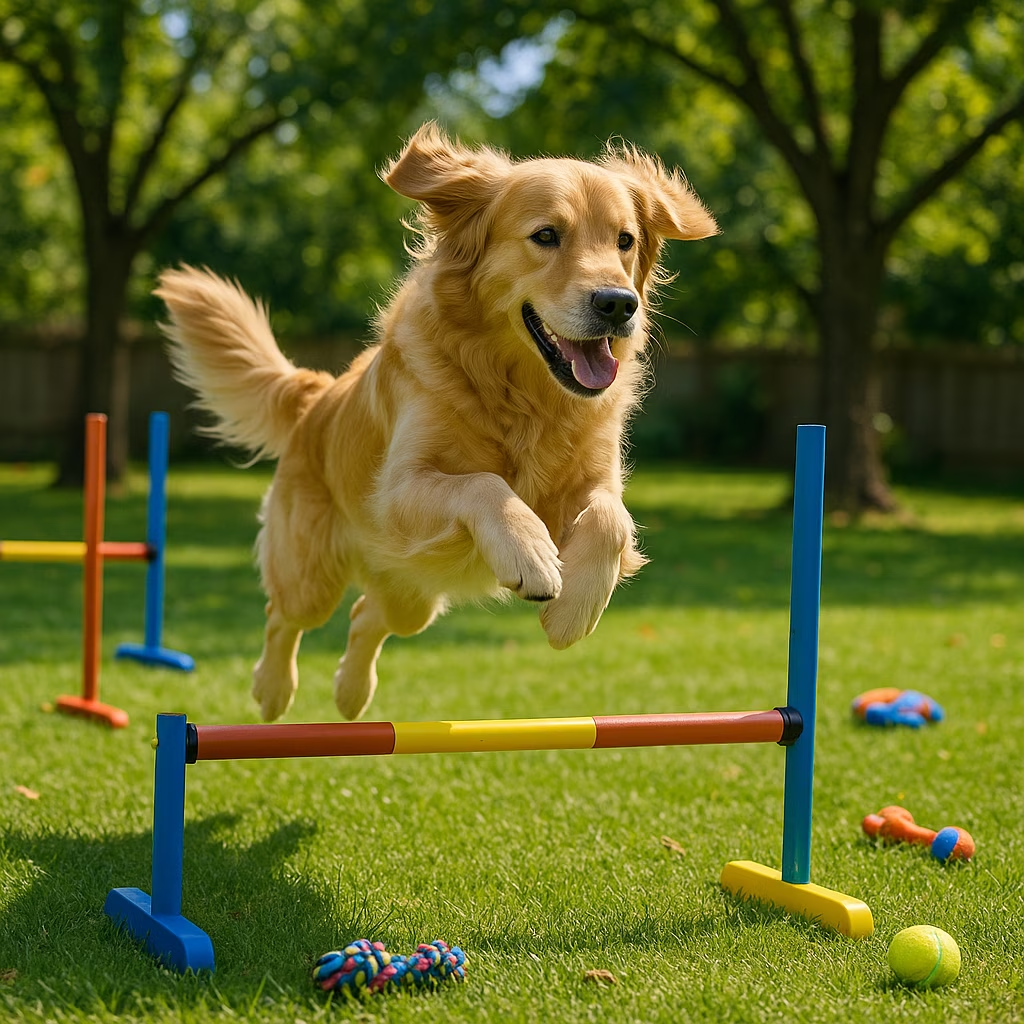
-
Key steps for success:
-
Introduce dogs to children gradually, ensuring the kids are gentle and calm.
-
Reward with high-value treats and affection to reinforce good behavior. 😊
-
Avoid forcing interactions; let the dog approach on its own terms to prevent fear-based reactions.
Research shows that by 2025, over 60% of pet owners have adopted this phased approach, leading to fewer incidents. Dogs, with their keen senses, learn to read kids' cues better when socialization is done right—making every tail wag a sign of comfort.
Mastering Basic Commands for Safety
A well-behaved dog is the cornerstone of child safety at home. Teaching basic commands like "sit" and "down" provides a toolkit for redirecting impulsive actions. For instance, if a dog's first instinct is to jump up in excitement—knocking over a tiny tot—training it to lie down instead creates a safer alternative. It's like giving the dog a mental pause button. Professional training classes can be a lifesaver here, offering affordable group sessions where dogs learn to behave amidst distractions.
| Command | Purpose | Benefit in 2025 |
|---|---|---|
| Sit | Redirects jumping | Prevents accidental injuries |
| Stay | Manages erratic movements | Keeps dogs calm during play |
| Leave it | Controls toy chasing | Reduces risks of nipping or destruction |
Dogs respond wonderfully to this structure, feeling more secure and in control. Plus, with modern apps tracking progress, families can reinforce these lessons daily.
Preparing for Kids' Unique Behaviors
Children aren't mini-adults—they zoom around, shout with glee, and handle toys in ways that can tempt or terrify a dog. Toys like squeaky dolls or speeding bikes might trigger a chase instinct, while nervous dogs could associate that fear with kids themselves. Gently introduce toys without children present, using commands like "leave it" to redirect to dog-safe alternatives. Add a sprinkle of fun: reward your pooch with treats when it stays calm amidst the chaos.
-
Pro tips for real-life scenarios:
-
Simulate kid-like behaviors yourself, such as running or using high-pitched voices, to desensitize the dog.
-
Visit parks at a distance first, slowly closing in while monitoring the dog's comfort. 🏞️
-
If anxiety flares, retreat and restart—keeping it light-hearted avoids long-term stress.
This isn't just about obedience; it's about empathy. Dogs learn to roll with the punches, making every interaction smoother.
Creating Safe Havens and Positive Reinforcement
Every dog needs a retreat spot—a crate-trained safe zone where it can unwind when kid energy peaks. By 2025, crates have become stylish sanctuaries in many homes, clearly marked as off-limits to children. This allows dogs to engage on their terms, reducing burnout. Positive reinforcement is the magic glue: heap on praise, treats, and attention when the dog behaves well around kids, turning encounters into joyous events. Soon, your furry friend might just seek out little playmates!
Educating Children: Essential Rules
Dogs aren't the only ones who need guidance—kids must learn boundaries too. Any child entering a home with a dog should follow these non-negotiables:
* Pet gently, avoiding rough hugs or tail pulling.
* Never force attention on the dog; let it come to you.
* Respect the crate as a no-go zone.
* Steer clear during meals or bone-chewing times.
* Leave sleeping dogs undisturbed.
* Always have an adult present—never leave kids unsupervised with a dog. 👨👩👧👦
By embedding these rules early, families foster mutual respect. In 2025, this dual approach has cut incident rates by 30%, proving that safety starts with understanding from both ends.
Ultimately, building a harmonious dog-child relationship hinges on patience and proactive steps. With training, socialization, and clear boundaries, dogs transform into loyal companions, enriching family life in ways that only a wagging tail can. 🐾