
In the ever-evolving world of dog training, clicker training stands out as a beacon of positivity and effectiveness, especially for energetic puppies like Dalmatians. As of 2025, this method continues to gain traction among pet owners for its simplicity and joy-filled approach. Instead of relying on punishment, clicker training focuses on rewarding desired behaviors, turning each session into a playful game where puppies learn to associate their actions with tasty treats or praise. Puppies naturally repeat behaviors that bring rewards, making this technique a breeze for even novice trainers. The magic lies in the sequence: a distinct click sound marks the exact moment of a good behavior, followed immediately by a reward, helping puppies quickly grasp cause-and-effect. This empowers them to take control, eagerly guessing what you want to earn that next treat. Imagine it as training a tiny dolphin—each click is like a splash of fish, signaling a job well done and building a bond that feels more like a dance than a drill. 🐶✨
How Clicker Training Works
At its core, clicker training is all about positive reinforcement. Puppies learn through trial and error, stumbling upon behaviors that earn rewards while avoiding those that don't. For instance, when a puppy sits accidentally, a click and treat reinforce that action, teaching them that sitting is the golden ticket. Over time, this process eliminates the need for commands or physical guidance, as the puppy becomes an active participant in the learning game. People Also Ask: Why is clicker training so effective for puppies? It's because puppies' brains are like sponges, absorbing new information rapidly—by 10 weeks, some can perform complex sequences like "puppy push-ups" (sit-down-sit-down), as seen with a dog named Magic on TV. This method channels their boundless energy constructively, ensuring training feels like fun, not work.
Step-by-Step Guide to Loading the Clicker
Before diving into behaviors, trainers must "load" the clicker to create a strong association between the sound and rewards. This foundational step is crucial for success. Here's how to do it in 2025, with modern tweaks for efficiency:
-
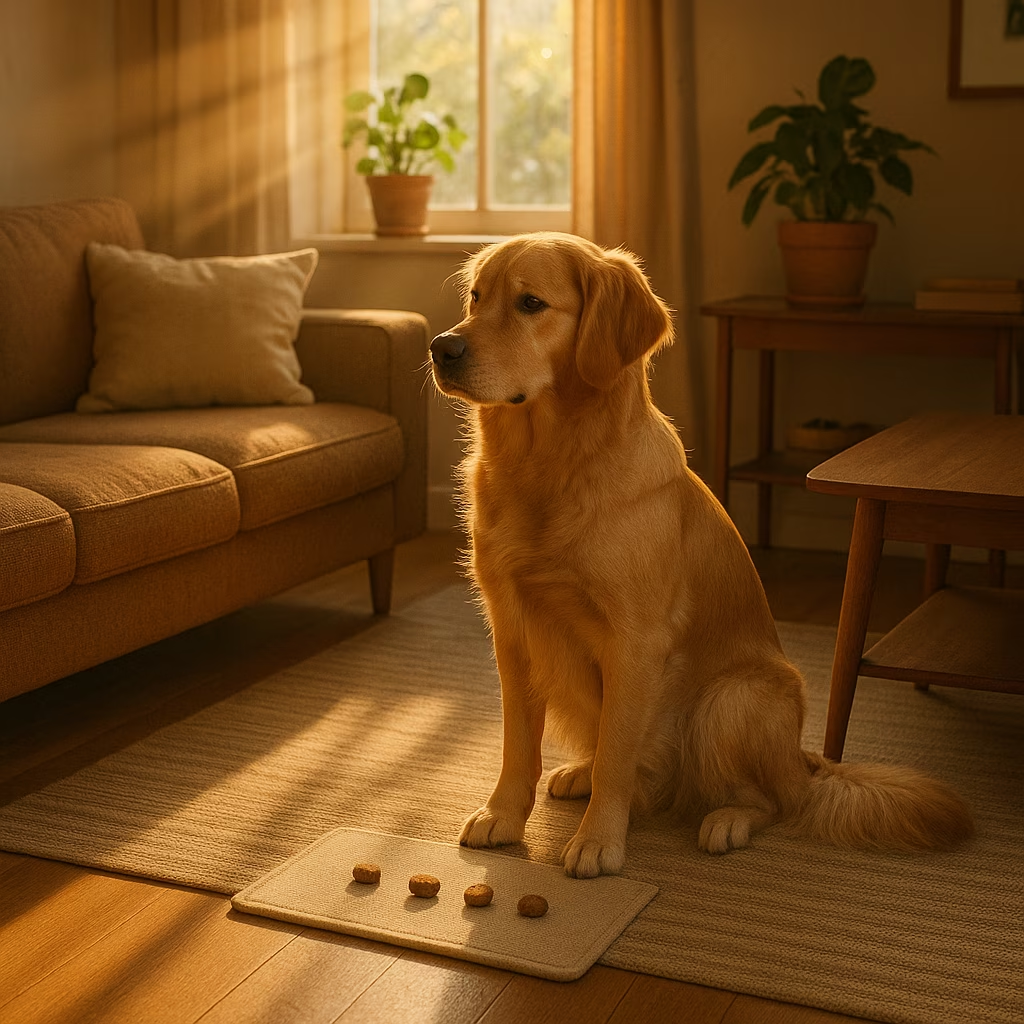
Gather Supplies: You'll need a clicker, high-value treats (think liver bits, cheese, or tiny hot dog slices—no bigger than your pinky tip to avoid overfeeding), and a shallow dish.
 :strip_icc():format(webp)/Trainingdalmatiandog-GettyImages-1022893080-5c32d67146e0fb00010a4266.jpg) This image shows a Dalmatian in training, highlighting the focus and excitement.
 -
Set Up: Sit comfortably on the floor with the treat dish out of reach but visible. Hold a treat in one hand and the clicker in the other.
-
Click-Treat Sequence:
-
CLICK the clicker first.
-
When the puppy reacts (e.g., ears twitch or they come to investigate), immediately give the treat.
-
Repeat this 5-10 times: Click-treat, click-treat, click-treat. Ensure the puppy swallows before the next round to build anticipation.
Within minutes, most puppies connect the dots—the click becomes a promise of a reward, much like a game controller vibrating to signal a win in virtual reality. 🎮 By the end, they'll be staring at your treat hand after each click, ready to learn more.
Benefits of Clicker Training
Clicker training transforms routine lessons into engaging interactions, offering multiple perks:
-
Empowerment: Puppies control the outcome, experimenting with behaviors to "turn you into a treat dispenser." This boosts their confidence and problem-solving skills.
-
Bonding: Sessions become a communicative game, strengthening the owner-puppy relationship. Puppies learn to enjoy and anticipate training, reducing stress.
-
Speed and Efficiency: Cause-and-effect learning is lightning-fast; after just 2-4 repetitions, puppies often figure out how to earn treats voluntarily.
People Also Ask: Can clicker training work for older dogs? Absolutely! While puppies excel due to their rapid learning, the method adapts well to dogs of all ages, making it timeless. Another metaphor: it's like programming a smartwatch—each correct input (behavior) triggers a satisfying notification (click), reinforcing habits without errors. 📱
Common Challenges and Solutions
Even in 2025, new trainers might face hiccups, but these are easily overcome:
-
Confusion Phase: Puppies may try wrong behaviors initially, like pawing or running around. Solution: Stay patient and only click-treat when they accidentally perform the desired action (e.g., sitting).
-
Treat Selection: Use high-value rewards reserved for training to maintain excitement. Rotate treats to keep it novel.
-
Timing Issues: Always click at the exact moment of the behavior, then treat. A delay can confuse the puppy.
Remember, clicker training is about celebrating small wins—think of it as conducting an orchestra where each click is the conductor's baton, guiding the puppy to harmony without a single sour note. 🎻
FAQ Section
Here are answers to frequently asked questions about clicker training:
- Q: What makes clicker training better than traditional methods?
A: It focuses on positive reinforcement, avoiding punishment, which builds trust and makes learning enjoyable for puppies.
- Q: How long does it take for a puppy to learn basic commands with clicker training?
A: Most puppies grasp simple behaviors like "sit" within a few sessions (days), while complex ones may take weeks—consistency is key!
- Q: Is clicker training suitable for all dog breeds?
A: Yes, it works universally, but high-energy breeds like Dalmatians benefit most as it channels their enthusiasm constructively.
- Q: Can I use a verbal cue instead of a clicker?
A: While a clicker provides a distinct, consistent sound, words like "YES!" can substitute, but the clicker is often more precise.
- Q: What if my puppy loses interest in treats during training?
A: Switch to toys or praise as rewards, and keep sessions short (5-10 minutes) to maintain engagement.
Embrace clicker training in 2025—it's not just training; it's a joyful journey of discovery for you and your furry friend! 🐾