
In the dynamic world of canine companionship in 2026, the 'stay' command remains a cornerstone of basic dog training, arguably just as vital as the recall command. Why is it so crucial? This simple instruction forms a critical line of defense, potentially protecting a dog from rushing into traffic, approaching an unsafe animal, or getting underfoot during daily activities. Beyond safety, 'stay' cultivates a sense of calm and discipline, proving invaluable when owners are occupied with chores, entertaining guests, or navigating public spaces. While modern training methods have evolved, the fundamental principles of teaching 'stay' have stood the test of time, requiring patience, consistency, and clear communication.
Training the 'stay' command is a straightforward process that doesn't require hours of daily commitment. The key is consistent, short, and positive sessions. Imagine dedicating just five to ten minutes, two to three times a day. What can you achieve? A solid foundation where your dog learns that 'stay' means to remain in place—whether sitting or lying down—until released. Success is built incrementally. Start with the goal of a mere one or two-second hold, lavishly rewarding that moment of stillness. From there, you can gradually build duration, working up to stays that last several minutes. Isn't it remarkable how such a small daily investment can yield such significant control and peace of mind?
🛠️ Preparing for Success: The 2026 Trainer's Toolkit
Before embarking on this training journey, gather your essentials. While high-tech training collars exist, the basics are still highly effective:
-
A Well-Fitted Collar or Harness: For safety and control.
-
An Extra-Long Leash (15-30 feet): This is your training safety net. Even though the ultimate goal is an off-leash 'stay,' the long line prevents early mistakes from becoming rehearsed failures.
-
High-Value Training Treats: Use something your dog truly loves! In 2026, the market is flooded with healthy, single-ingredient treats perfect for training.
A critical prerequisite is that your dog already reliably knows the 'sit' and/or 'down' commands. If not, it's essential to master those first. Trying to teach 'stay' on a dog that won't hold a position is like building a house on sand.
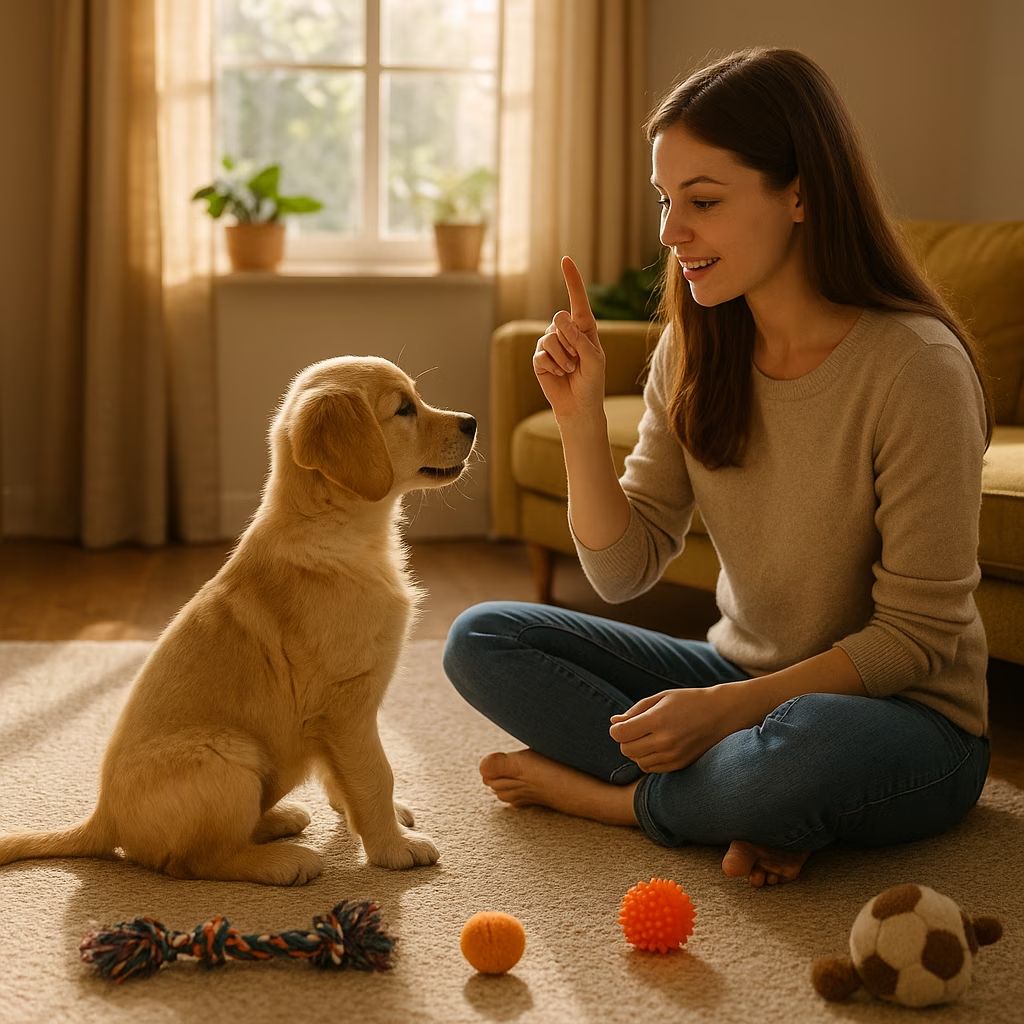
📝 The Step-by-Step Training Protocol
-
Set the Stage: Attach the collar and the extra-long leash. Instruct your dog to 'sit' or 'down.' If your pup is excitable, starting in a 'down' position often promotes better focus.
-
Introduce the Cue: Say "Stay" in a clear, firm tone. Simultaneously, give a clear hand signal—the universally recognized palm facing out, like a 'stop' sign. This dual communication (verbal and visual) helps dogs learn faster.
-
The Instant Reward: If your dog holds position for even a split second, immediately praise and give a treat! This marks the exact behavior you want.
-
The Release: Use a release word like "OK!" or "Free!" to tell your dog the command is over. Encourage them to move. This teaches them that 'stay' has a definite beginning and end.
-
Add Distance: Repeat the process. After giving the 'stay' cue, take one careful step backward. If your dog holds, slowly walk back to them (don't call them to you), reward, and then release. Gradually increase the number of steps you take away.
-
Build Duration and Distractions: Once your dog can stay reliably for 30 seconds at the end of the long leash, it's time to up the challenge. The 'Three Ds' of dog training are your guide:
-
Duration: Slowly increase the time between 'stay' and 'release.'
-
Distance: Increase how far you move away.
-
Distraction: Introduce mild distractions in a controlled way.
-
🌳 Choosing the Right Training Environment
Location is everything, especially in the beginning. You need a 'low-distraction laboratory' to teach the skill before testing it in the real world. A quiet, fenced yard is ideal. Without one, seek out:
-
An empty park or field early in the morning.
-
A quiet hallway or large room indoors.
-
A willing neighbor's secure yard.
Avoid busy dog parks or bustling sidewalks for initial training—they are simply too stimulating for learning a new, calm behavior.
⚠️ Important Safety and Training Philosophies for 2026
Modern training emphasizes relationship and management. Never assume your dog is 'proofed' after a few good sessions. A newly trained 'stay' is a fragile skill. Always err on the side of caution:
-
Use the Leash: In new or potentially risky situations, keep your dog on a leash. Don't set them up to fail by using 'stay' in an environment they can't handle yet.
-
End Positively: Always try to end training sessions on a success. If 'stay' is falling apart, ask for a simple 'sit' that your dog knows well, reward it, and end the session. This keeps the dog's confidence high.
-
Phase Out Treats, Not Praise: Once your dog is an expert, you can transition from a treat every time to a variable reward schedule (treating occasionally). However, verbal praise and petting should remain a constant reward. The goal is for your compliance and connection to be the ultimate reward.
🧪 The Final Test: Proofing with Purpose
How do you know if your dog has truly mastered 'stay'? It's time to proof the behavior. This means practicing under more realistic conditions. Try these challenges one at a time:
| Challenge Level | Example Distractions |
|---|---|
| Mild | Dropping a treat on the floor nearby, squeaking a toy softly. |
| Moderate | Having a family member walk across the room, knocking gently on a door. |
| Advanced | Leaving your dog's line of sight briefly, practicing in a new location like a quiet store entrance. |
Remember, each new distraction or location is like starting over at a slightly higher level. Go back to shorter durations and closer distances, and build back up. With consistent, positive practice, the 'stay' command will become a reliable part of your dog's behavioral repertoire, ensuring their safety and enhancing your bond for years to come. Isn't that the ultimate goal of any training?