
So, 2025 rolled around, and I finally decided to bring home my first puppy, a little ball of fluff I named Pixel. Let me tell you, those first few weeks from 8 to 12 weeks old were a whirlwind of tiny paws, sharp needle teeth, and more ‘accidents’ than I care to admit. It’s a phase where they’re leaving puppyhood behind but are still so incredibly small and vulnerable, even the ‘big’ breeds. The vet told me this is the imprinting stage—their brains are developing like crazy, soaking up every experience, good or bad. It’s like they’re a tiny sponge with a wagging tail. You have to be so careful because what they learn now sticks with them.
The Round-the-Clock Nap Schedule (and Sudden Zoomies)
Honestly, I was shocked by how much Pixel slept. We’re talking 18 to 20 hours a day! The vet said it’s all that rapid growth—brains and bodies working overtime. But oh boy, when he was awake, it was like a tiny tornado. He’d have these bursts of energy, racing around the living room, and then… poof… he’d be asleep mid-play. One minute he’s chasing his tail, the next he’s snoring on my slipper. It was hilarious and a little chaotic.
The Great House-Training Adventure 🐾
This was, let’s say, a learning curve for both of us. Before 12 weeks, puppies just don’t have much control. Waking up through the night for potty breaks became my new normal—a true test of patience. I started house-training the day he came home, sticking to a strict schedule: outside after every nap, meal, and drink. I’d lead him to his special ‘potty spot’ in the yard and throw a mini-party with treats and praise when he got it right. After a few weeks, I could see the lightbulb moment happening. He started to ‘get it.’ Progress was slow, but those tiny victories felt huge.
Teething: The Chew-All-Phase
Right around the 8-12 week mark, I noticed some baby teeth starting to fall out. Then the real fun began! The signs were unmistakable:
-
Excessive drooling (my floors were a slip hazard!)
-
Chewing on EVERYTHING (RIP to my favorite headphones)
-
Pawing at his mouth
-
Finding little bloody spots on his toys
I stocked up on puppy teething toys, which were a lifesaver. They helped soothe his gums through this natural but painful process. It’s a phase you just have to ride out with plenty of appropriate things to chomp on.
Navigating the ‘Fear Stage’ with Care
This period from 3 to 12 weeks is super critical for socialization. They call it a ‘fear stage’ for a reason—puppies can seem scared of their own shadow! I made it a point to:
-
Handle him gently all over—paws, ears, mouth—so he’d get used to vet exams and grooming.
-
Introduce new things positively: sounds, sights, even the scary vacuum cleaner.
-
Reward calm behavior in new situations.
The key was to stay calm myself. If he was scared, I wouldn’t coddle him but just acted like everything was normal. Pushing him would have backfired big time. Slowly, he learned the world wasn’t so scary.
Health First: Vet Visits and Safe Socializing
One of the first things I did was get Pixel to the vet. Puppies need their first vaccines and a check-up between 6-8 weeks. I brought all his records from the breeder. The vet set up his vaccination schedule, which would be complete by around 18 weeks.
Until he was fully vaccinated, I had to be super careful about where he went. No dog parks or high-traffic areas! The risk of disease was too high. For playdates, I only let him interact with healthy, vaccinated dogs whose owners I knew and trusted. It’s just not worth the gamble.
Fueling Growth: The Food Situation 🍽️
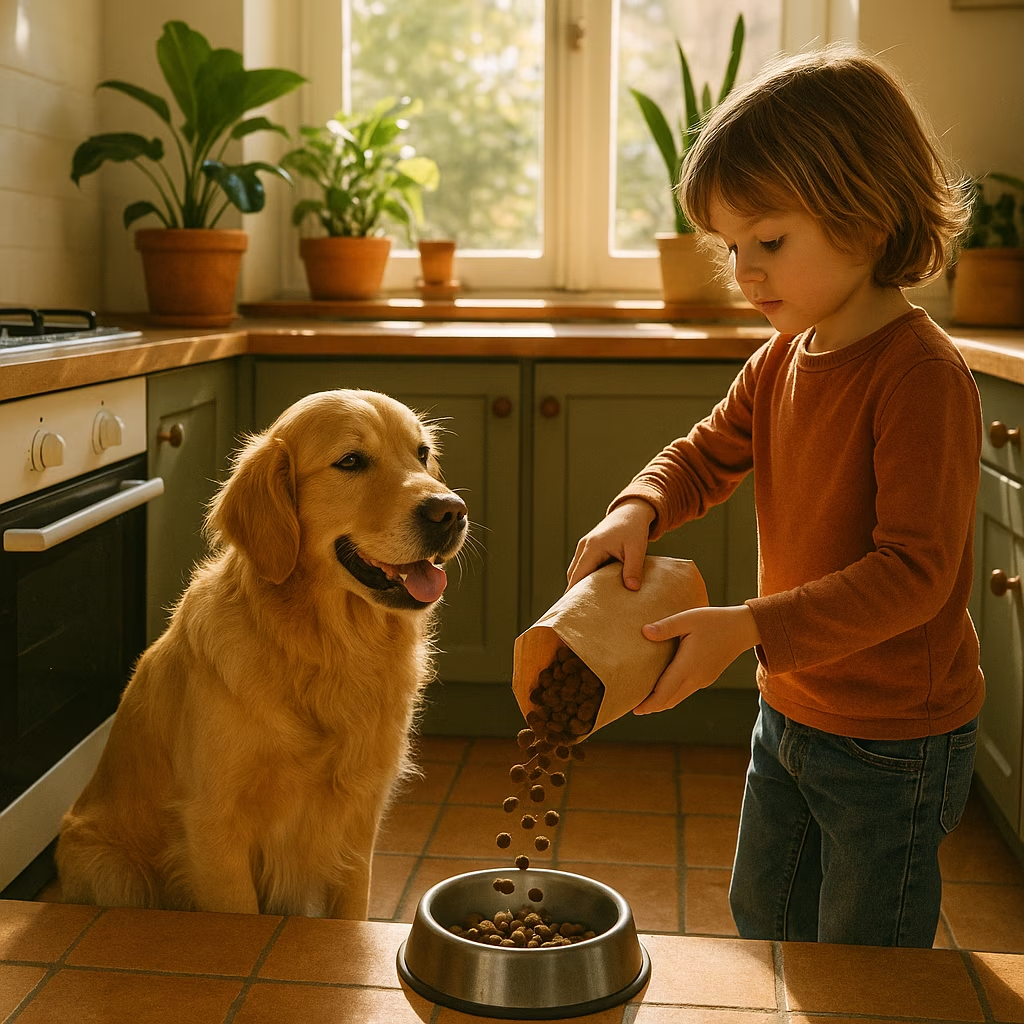
Pixel was already weaned onto puppy food when I got him. I kept him on the same diet at first to avoid tummy troubles. After he settled in, I transitioned him to a high-quality growth-formula food.
| Age | Meals Per Day | Key Focus |
|---|---|---|
| 8-12 weeks | 3 | Consistent schedule, prevent low blood sugar |
I started with the amount on the bag and adjusted based on his weight and appetite. If he scarfed everything down and still seemed hungry, I added a bit more. If he left food, I gave less. My vet was my partner in this—I discussed brand, portion size, and frequency at every visit. Treats were fine but had to be safe, healthy, and less than 10% of his daily calories.
Baby’s First Training Sessions
Even at this young age, we started training! It was all about keeping it simple and positive.
-
Step 1: Teach his name. Simple, but so important.
-
Step 2: Let him learn the house rules—where he could and couldn’t go.
-
Step 3: Get him used to a collar, then a leash. I’d let him drag it around the house to get the feel of it before we even tried a ‘walk’.
-
Step 4: Introduce basic commands like ‘sit’ and ‘stay.’
He wasn’t the fastest learner—everything was new and overwhelming—but patience and fun were the names of the game. Short, happy sessions worked best.
Frequently Pondered Questions (From One New Owner to Another)
-
Will he sleep through the night? Ha! Most puppies won’t until about four months old. Get used to those 2 AM bathroom trips. It’s just part of the deal.
-
How long can we walk? The rule of thumb is five minutes per month of age. So at 12 weeks (3 months), that’s about a 15-minute walk. Avoid hot pavement and extreme weather!
-
How often does he need to go out? A 12-week-old pup can typically hold it for 4-6 hours. That means at least four potty breaks a day. Setting phone reminders saved my sanity.
Looking back, those weeks were exhausting, messy, and absolutely wonderful. It’s a time of massive change, where you lay the foundation for a well-adjusted, healthy dog. You’re not just raising a puppy; you’re building a friendship, one tiny, clumsy step at a time.