
My Journey to Mastering the Gentle Walk with My Best Friend
I remember the first time I tried to walk my golden retriever, Sunny - it felt more like being dragged by a furry tornado than taking a peaceful stroll. Back in 2025, I discovered the "loose leash" technique, and it completely transformed our walking experience from a battle of wills into a beautiful dance of partnership.
 :strip_icc():format(webp)/GettyImages-1280731587-8a551bb0011949bf9c4f3796a1ab4d20.jpg)
The Foundation: Positive Reinforcement is Everything
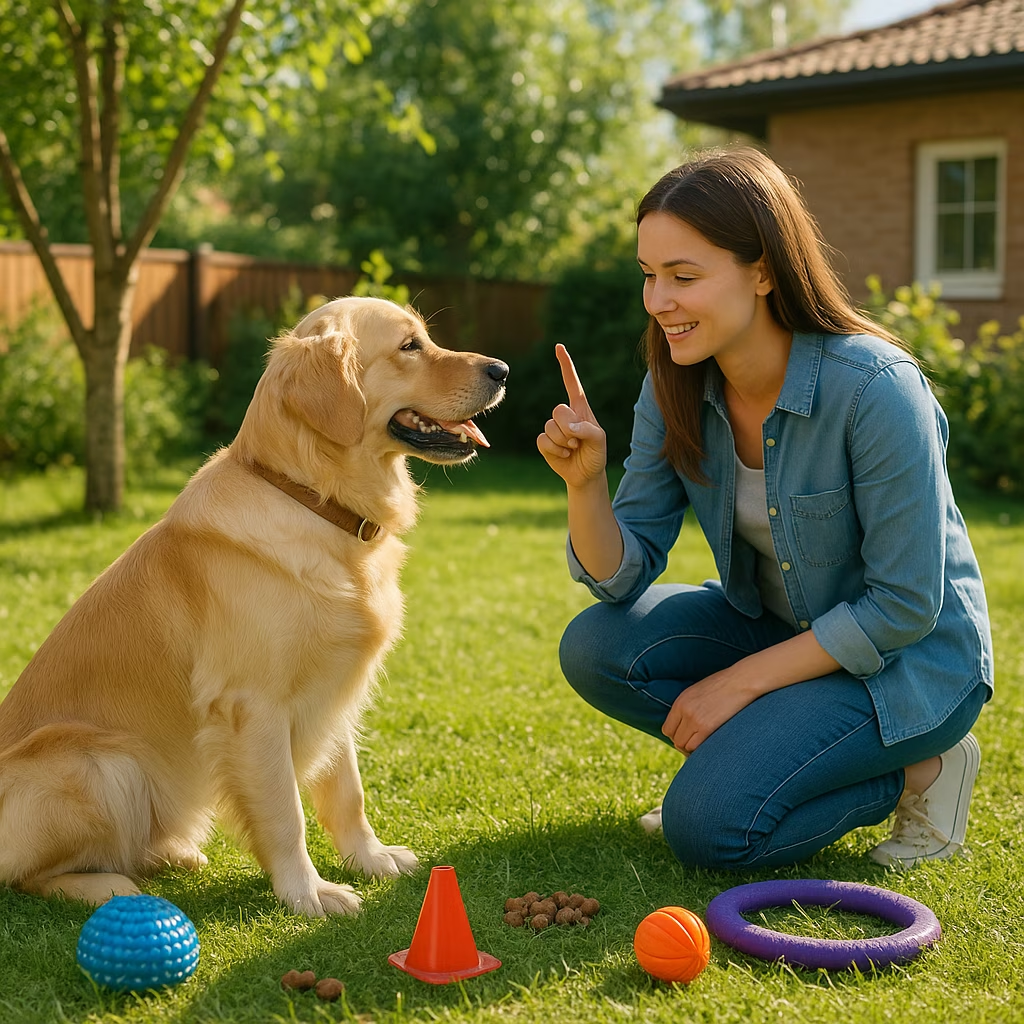
Let me tell you - the most important lesson I learned was that training should feel like a game, not a punishment. Positive reinforcement became our secret sauce. When Sunny walked nicely beside me, he got:
🎯 Verbal praise - "Good boy!" in my happiest voice
🎯 Physical affection - gentle pats and scratches
🎯 High-value treats - his favorite chicken bites
Dogs, much like people, respond better to encouragement than criticism. It's like they're thinking, "Hey, this staying close thing is pretty awesome!"
Getting the Right Gear
Before we even started training, I had to make some important equipment choices:
| Equipment Type | Considerations | What I Chose for Sunny |
|---|---|---|
| Leash | 6-foot length for balance of control and freedom | Standard nylon leash |
| Collar/Harness | Breed, health, and comfort factors | Front-clip harness |
| Training Aids | Positive reinforcement tools | Treat pouch and clicker |
I learned the hard way that choke chains and prong collars are absolute no-gos - they can cause serious injuries. For Sunny, a harness worked best because it distributed pressure evenly across his chest instead of his neck.
The Magic Word: Creating Our Signal
Every great partnership needs clear communication. I chose "with me" as our cue phrase. The key was consistency - same words, same tone, every single time. It's amazing how quickly Sunny learned to associate those two little words with walking politely by my side.
Two Techniques That Changed Everything
The Stop-and-Go Method
When Sunny started pulling, I'd stop dead in my tracks. No moving forward until the leash went slack. At first, we'd take two steps forward, stop, wait, then two more steps. It felt like we were doing the world's slowest dance, but eventually, he got the message: "Pulling = no forward progress."
The Turn-Around Technique
Sometimes Sunny would get so excited he wouldn't notice we'd stopped. That's when I'd pull out the turn-around move. The moment he pulled, I'd calmly turn 180 degrees and walk the other way. The first few times, we probably looked like we were doing doggy square dancing, but it taught Sunny to pay attention to where I was going.
Making Myself More Interesting Than Squirrels
Let's be real - the outside world is full of distractions that are way more exciting than I am. Squirrels, other dogs, interesting smells... it's like trying to compete with Disneyland! So I had to make staying close to me the best option.
I started carrying high-value treats that smelled amazing to a dog's sensitive nose. When Sunny stayed close, he'd get a nibble. When he pulled, the treats disappeared. It didn't take long for him to realize that good things happen when he walks nicely.
The Gradual Approach: Building Confidence Together
We didn't start our training on busy streets. Our journey looked like this:
-
Living room - Mastered the basics in a distraction-free zone
-
Backyard - Added mild outdoor distractions
-
Quiet sidewalk - Introduced neighborhood sounds and smells
-
Busier areas - Gradually increased difficulty as we improved
This step-by-step approach built both our confidences. By the time we tackled challenging environments, we had a solid foundation.
The Transformation
After weeks of consistent practice, something magical happened. Sunny started checking in with me during our walks, glancing up as if to say, "Are we good?" The constant pulling stopped, and we developed this beautiful rhythm where we moved together as a team.
Training a dog to walk on a loose leash isn't about control - it's about communication and partnership. It's that moment when your dog chooses to walk beside you not because they have to, but because they want to. And honestly? That connection is worth every stop, every turn, and every treat along the way.