
Alright, let me get this straight. It’s 2026, and I’m still trying to teach my four-legged best friend that a walk is not an Olympic-level tug-of-war competition. I’ve been dragged, I’ve been spun in circles, and I’ve had more conversations with my dog about personal space than with most of my human acquaintances. The dream, as I’ve learned, isn't about creating a perfect, robotic "heel." It's about that magical, mythical state known as the "loose leash"—a beautiful compromise where my arm stays in its socket, and Fido still gets to be a dog, sniffing that absolutely critical patch of grass for the 47th time. It’s about partnership, not dictatorship, and it all hinges on one glorious principle: making the right choice the most rewarding one.
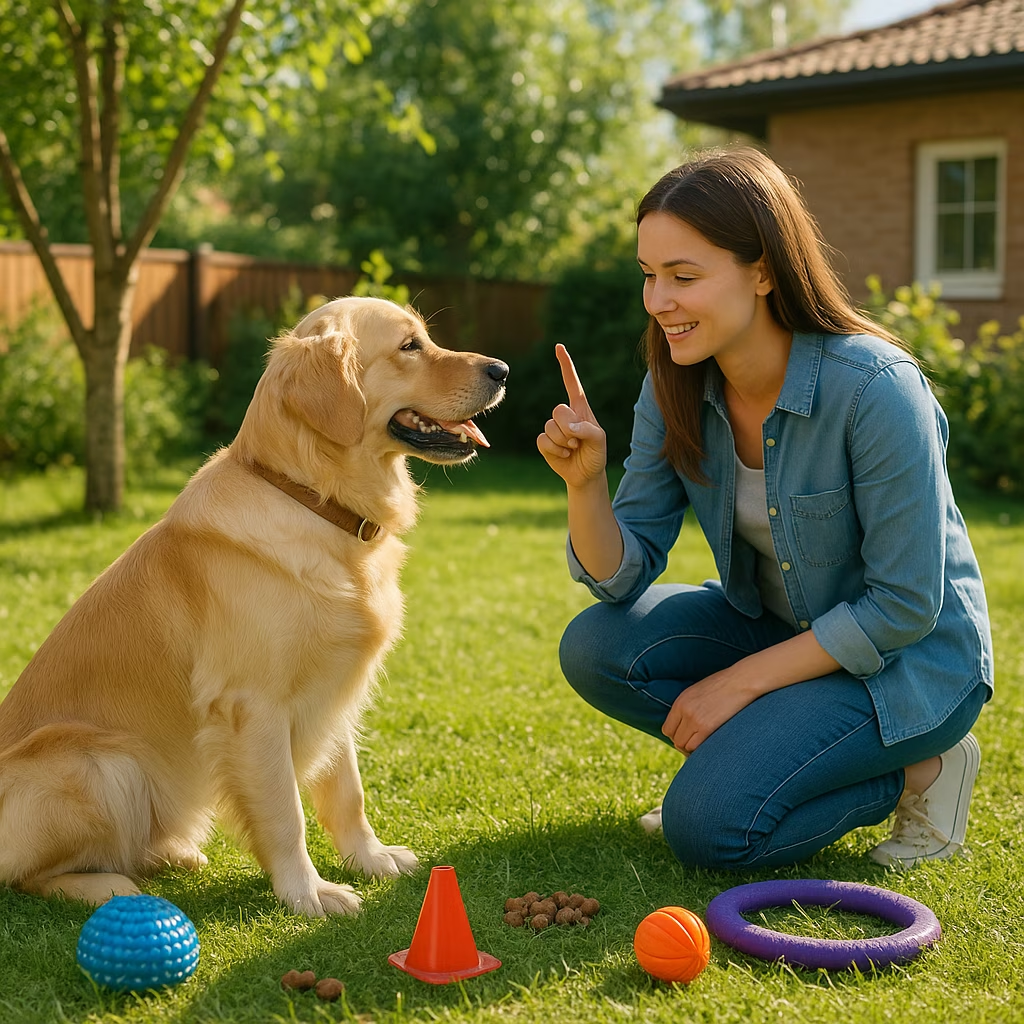
The cornerstone of this entire operation, the North Star of modern dog training, is positive reinforcement. We’re talking about a symphony of praise, pats, and the almighty treat. Every time my pup chooses to walk nicely beside me instead of launching himself toward a squirrel like a furry missile, it’s a party. A little verbal celebration, a tasty morsel—it’s all about building that positive association. The goal is to make me more interesting than the entire outside world. A tall order, I know.
Before we even step outside, we need the right gear. For the loose leash technique, I’ve found a standard six-foot leash to be the sweet spot. It offers enough length for some sniffing autonomy but keeps my canine companion safely within the sphere of my control. The collar vs. harness debate is a big one. I did my homework. For my strong-pulling, barrel-chested buddy, a front-clip harness was a game-changer; it gently turns him toward me when he pulls, rather than letting him lean into the pressure like a sled dog. Let me be crystal clear: tools like choke chains and prong collars are relics of the past. The risks of serious injury to the neck and trachea are just not worth it, especially when we have so many better, kinder options now in 2026.
The training begins with a cue. I picked "with me." It’s short, sweet, and I say it in the same upbeat tone every single time. Consistency is the name of the game. We start our walk with him by my side, I say the magic words, and off we go. Now, here’s where the real fun (ahem, work) begins. Dogs are individuals, so I tried two main methods to see what clicked.
Method 1: The Stop-and-Go (Also Known as The Human Tree)
If my dog hits the end of the leash and pulls, I stop. Dead stop. I become a statue. The message is simple: pulling = forward progress halts. We don't move again until there's slack in the line. The moment he eases up and looks back at me, I praise him, say "with me," and we resume our journey. This method requires the patience of a saint, especially when you’re standing motionless on a sidewalk while your dog stares at you like you’ve lost your mind.
Method 2: The 180-Degree "Nope" (The Change-Up)
Some dogs are master ignorers. If mine just kept leaning into the leash when I stopped, I’d deploy the change of direction. The instant he pulled, I’d cheerfully turn 180 degrees and walk the other way. This is genius because it goes against his desired trajectory. Suddenly, he has to pay attention to me to figure out where we’re going next. The first few times, we looked like we were doing an awkward sidewalk waltz, spinning in circles. But the lesson sinks in: pulling doesn't get you where you want to go; it gets you somewhere entirely different.
| Scenario | My Action | The Lesson for My Dog |
|---|---|---|
| Leash goes tight | STOP walking 🛑 | Pulling makes the fun stop. |
| Leash goes slack | Praise/Treat & GO 🎉💖 | Being near me is awesome! |
| Dog ignores the stop | Turn and go opposite way ↩️ | Pulling leads to unexpected destinations. |
To supercharge the process, especially in those early, distraction-filled days, I became a walking treat dispenser. I’d hold some high-value, aromatic goodies in my hand at my side. When he drifted into that sweet spot beside me without tension on the leash—click—treat delivered. It powerfully reinforces that magic zone. Remember, we’re competing with the world’s greatest smells! We need a compelling offer.
Patience and perseverance are non-negotiable. I had to remind myself that my dog wasn't being stubborn; he was learning a whole new language. Getting frustrated or yanking on the leash is counterproductive—that’s negative reinforcement, and it just breeds anxiety and confusion. We’re building trust, not fear.
The final, critical piece is proofing the behavior. We didn't start on the busy street. Our training journey looked like this:
-
The Living Room: A boring, safe zone with zero distractions. Master the basics here.
-
The Backyard: Slightly more interesting, with grass and maybe a bird. Practice consistency.
-
The Quiet Sidewalk: Introduce real-world smells and sights in a controlled way.
-
The Park (Eventually): The ultimate test with other dogs, people, and squirrels galore.
By gradually increasing the difficulty, we built confidence together. Now, in 2026, our walks are a genuine joy. He checks in with me, I reward him lavishly for his focus, and we both get to enjoy the great outdoors without the struggle. It took time, consistency, and a whole lot of tasty reinforcements, but achieving that loose leash walking harmony was worth every single circled block. It’s less about controlling the walk and more about enjoying the journey—together. 🐾