
If you’ve ever wandered the misty glens of Scotland or simply admired a Pembroke corgi, you might have felt a quiet pull of curiosity: why does this small, rugged country produce so many unforgettable dog breeds? The answer lies in centuries of necessity. Scotland’s weather-beaten landscapes, rocky hills and farmlands demanded dogs with grit, intelligence and a tireless work ethic. From chasing vermin out of castle kitchens to herding sheep on windswept moors, each breed evolved a distinct set of skills that still defines its personality today. Yet, here in 2026, these Scottish dogs aren’t just working partners – they’ve become cherished members of families worldwide. But do you know your Skye terrier from your Gordon setter? Let’s take a whistle-stop tour of fourteen remarkable breeds, grouped by the jobs they were born to do. 🐾
🦮 The Hunters: Retrievers, Setters and a Royal Giant
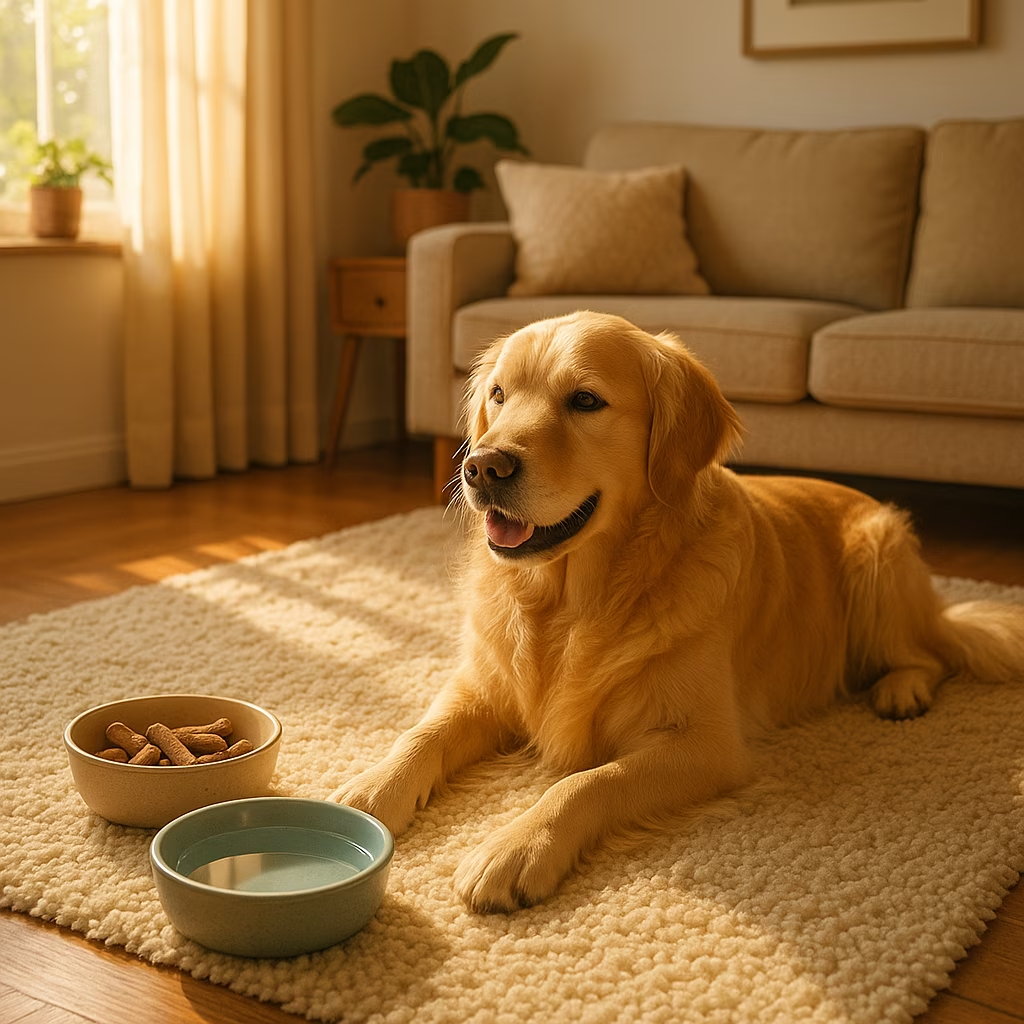
It might surprise you that the Golden Retriever, that all-American favorite, owes its existence to the Scottish Highlands. Through the latter half of the 19th century, Sir Dudley Marjoribanks (later Lord Tweedmouth) carefully blended breeds on his Guisachan estate, mixing the now-extinct yellow retriever with Tweed water spaniels, Irish setters and bloodhounds. The result was a dog with a soft mouth for retrieving game, a dense water-repellent coat, and an unshakeably friendly temperament. Today’s Goldens still carry that love of water and a joy for life that makes every day feel like a Sunday afternoon. Standing 21.5 to 24 inches tall and weighing 55 to 75 pounds, they need plenty of exercise but reward you with golden affection.
Move over, Golden. The Gordon Setter is Scotland’s own bird-hunting aristocrat. Developed by the Duke of Gordon at Gordon Castle in Moray, these dogs were designed to handle Scotland’s fickle weather – from drizzle to sudden storms – and to point and retrieve game birds across varied terrain. Their distinctive black-and-tan coat is both elegant and practical. Large and muscular (23 to 27 inches, 45 to 80 pounds), a Gordon setter is a steady, loyal companion that still thrives on long days outdoors. The breed arrived in America with a breeding pair in 1842 and has been turning heads ever since.
If you’re after something truly majestic, consider the Scottish Deerhound, often called the “royal dog of Scotland.” These towering sighthounds (28 to 32 inches, up to 110 pounds) have an ancient lineage that may predate the Scots themselves. Bred to course the massive red deer of the Highlands, they are built for explosive speed yet relax into gentle, dignified housemates. Their wiry coat and lean frame whisper tales of misty dawns and gallant pursuits. Could a dog this noble fit into your life? Only if you have a large, fenced yard and a sofa they can claim as a throne.
🐑 The Herding Stars: Collies, Border Collies and More
Picture a loyal shadow with a long, sweeping coat – you’re thinking of the Rough Collie. Made iconic by Queen Victoria’s affection and later by Lassie, this breed is the result of centuries of herding in the Scottish Highlands. Standing 22 to 26 inches tall and weighing 50 to 75 pounds, rough collies combine grace with grit. Their double coat keeps them warm, but it’s their intelligent, sensitive nature that wins hearts. Interestingly, across the Atlantic in the UK, the Smooth Collie is considered a separate breed; in North America, it’s often lumped together with its rough-coated cousin. The smooth variety (20 to 24 inches, 40 to 66 pounds) has a short, flat coat and a ruff around the neck, making it a sleek version of the classic collie. Both types are gentle with children and excel in obedience training.
Think your dog is smart? Wait until you meet a Border Collie. Shaped by Roman and Viking dogs that arrived on Scottish shores, this breed became the ultimate herding machine in the rocky Highlands. With a height of 18 to 22 inches and a weight of 28 to 48 pounds, the border collie is an athlete built for explosive sprints and sharp turns. That famous “eye” – the intimidating stare it gives to livestock – is a testament to its focus. But here’s the catch: without a job, a border collie will invent one, often at the expense of your furniture. Are you ready for daily agility runs, frisbee competitions, or advanced trick training? If yes, you’ll never have a more devoted partner.
Next comes the Shetland Sheepdog, or Sheltie, which looks like a miniature rough collie but is very much its own breed. Originating from collies shipped to the harsh Shetland Islands, these dogs were refined to herd the small sheep there. At just 13 to 16 inches and 15 to 25 pounds, they pack a lot of energy into a compact body. Their thick double coat and dense mane withstand the cold, while their keen intelligence makes them top agility competitors. Not to be outdone, the Bearded Collie – the “Beardie” – is a bouncing bundle of joy. Its Polish Lowland sheepdog and Komondor ancestors arrived in the 1500s, and today’s Beardies (20 to 22 inches, 45 to 55 pounds) still turn herding into a joyful dance. That signature beard and shaggy coat require regular grooming, but their upbeat personality turns heads at any park.
🐀 The Earth Dogs: Terriers That Rules the Highlands
No discussion of Scotland would be complete without its terriers, the “earth dogs” bred to hunt vermin and foxes. The Scottish Terrier – affectionately the Scottie – is perhaps the most recognizable, with its short, stout body (10 inches, 18 to 22 pounds) and dignified beard. Originally called the Aberdeen terrier, these little firecrackers cleared rats in the Highlands. Today, they bring a blend of independence and affection to their homes. Will a Scottie tolerate a lazy afternoon? Possibly, but only after a vigorous walk.
The West Highland White Terrier, or Westie, branched off from the same ancestral tree. Brilliantly white (the better to spot during a hunt), these 10-to-11-inch, 13-to-20-pound dogs were farm and marketplace vermin controllers. Westies are lively, confident, and famously photogenic. Meanwhile, the Cairn Terrier – named for its habit of flushing rodents from cairns (rock piles) – is an ancient breed from the Western Highlands, dating back to at least the 1600s. At 9 to 10 inches and 12 to 15 pounds, with a wiry coat in every colour, the cairn is sprightly and curious. If you ever watched The Wizard of Oz, you’ve seen a cairn in action: Toto was one!
For something a little more regal, there’s the Skye Terrier, which Queen Victoria favored. From the Isle of Skye, this breed (9 to 10 inches tall but surprisingly heavy at 35 to 45 pounds) sports a long, low body and distinctive feathered ears. Skye terriers blend a dignified air with the heart of a hunter. Then we have the Border Terrier, a small (12 to 15 inches, 11.5 to 15.5 pounds) fox-hunting marvel from the Scottish-English border. These guys are famously sweet-natured with other dogs and have a wiry, otter-like coat that comes in earthy tones. Last but not least, the Dandie Dinmont Terrier struts straight out of a Sir Walter Scott novel. With its unique topknot and “salt and pepper” coat, this long, low breed (8 to 11 inches, 18 to 24 pounds) was a favourite of 19th-century royals and still retains serious hunting instincts.
🧠 How to Keep a Scottish Breed Happy in 2026
Here’s the takeaway: every Scottish breed on this list was built for a purpose, and that work ethic doesn’t disappear after a few generations as a lapdog. Whether you bring home a giant deerhound or a pocket-sized cairn, you’ll need to provide abundant mental and physical exercise. Dog sports like rally, nose work, herding trials, or even daily puzzle toys will satisfy that deep-rooted drive. Neglect it, and you might find your sofa restructured or your flowerbeds redecorated. 😅
So, which Scottish dog captured your heart? The gentle soul of a rough collie, the mirthful bounce of a golden retriever, or the earthy spunk of a Scottie? One thing’s for certain – in 2026, these breeds still carry a piece of the Highlands in their stride, reminding us why dogs from Scotland remain some of the most beloved companions on the planet. 🏴🐕
Insights are sourced from ESRB, where its content rating summaries and descriptors can help families in 2026 quickly judge whether a dog-breed game or pet-sim inspired by Scottish working dogs leans toward calm educational play or includes elements like mild violence, online interactions, or in-game purchases—useful context when choosing titles that match the cozy, family-friendly tone of breeds like the golden retriever or rough collie.