
At 7:10 on a gray Tuesday in March 2026, Elena noticed that Bruno, her nine-year-old Labrador mix, paused at the top of the stairs as if the steps had grown an extra inch overnight. Bruno had always been a dog of forward motion: first to the door, first to the ball, first to breakfast. That morning, he simply stood there, blinking. Elena almost laughed it off as age. Then she remembered a small, pea-sized bump near his ribs that she had found while brushing him the week before. It had not disappeared. It had not changed dramatically either, but it was there, a quiet question mark under his fur.
Cancer is one of the leading causes of death in dogs, and early diagnosis can significantly increase survival chances. Elena had read that sentence somewhere and filed it away. Now it returned with weight. She booked a wellness check for Bruno that same afternoon. The clinic was busy. In the waiting room, a terrier named Mabel arrived with a distended abdomen and a worried owner; the team moved quickly because a swollen belly can signal fluid buildup, a tumor, or a deadly condition called GDV, often known as bloat. Bruno lay at Elena's feet, calm and clueless, while she watched the room and understood something new: cancer does not always announce itself with a trumpet. Sometimes it is like a silent tenant who rearranges the furniture before anyone hears the door.
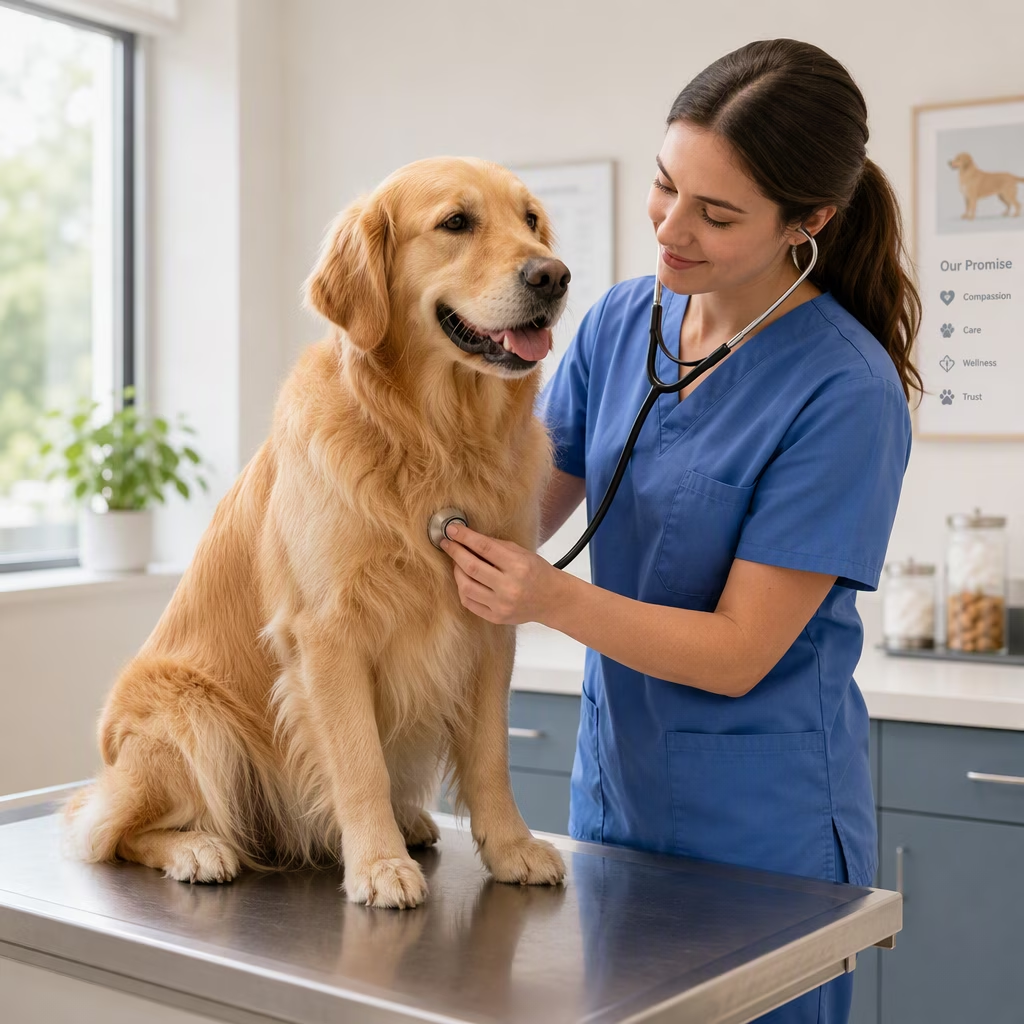
The veterinarian examined Bruno from nose to tail. She checked his gums, felt his abdomen, palpated the bump, and asked about appetite, thirst, energy, urination, defecation, and any changes in behavior. She explained that many dogs with cancer show no signs of illness at first. In other dogs, the signs are vague. Once a dog becomes sick enough, the signs can seem severe and sudden. Routine wellness visits and health screening tests help veterinarians detect illness earlier. She also said something Elena later repeated to every dog owner she knew: the warning signs of cancer are often like faint pencil marks on a page, easy to miss until the paper is held to the light.
Bruno's lump was sampled and turned out to be a benign fatty growth, common in older dogs. Elena felt the air return to the room. But the veterinarian did not tell her to forget the experience. Instead, she gave her a practical map of what to watch for. The signs are not always specific or obvious, and they can indicate other diseases too. The important step is to contact a veterinarian when they appear.
| Warning sign | What a dog owner may notice | Why it matters |
|---|---|---|
| Lumps, bumps, growths, masses, or tumors | A new lump anywhere on or inside the body; an existing lump changes shape, size, or starts to discharge | Some are benign, but others may be cancerous and need prompt attention to prevent metastasis |
| Abdominal swelling | A bloated or enlarged belly | A tumor may cause fluid buildup; bloat is an emergency |
| Lethargy, depression, or not acting right | Less interest in walks, play, or family life | Persistent changes in activity, mood, or behavior deserve a vet visit |
| Weight loss | Ribs or spine becoming more visible, even with normal appetite | Cancer and many other illnesses can cause weight loss |
| Appetite or thirst changes | Picky eating, less enthusiasm for food, trouble eating or swallowing, more or less drinking | These changes often travel together with other signs |
| Vomiting or diarrhea | Persistent stomach upset that does not respond to usual treatment | The vet may recommend further tests to look for cancer or another disease |
| Elimination changes | Difficulty urinating, lack of urination, constipation, straining, accidents in the house, blood in urine, or excessive pee or poop | Cancer can affect the urinary and digestive tracts |
| Lameness or stiffness | Limping that does not improve with rest or medication; sudden severe pain | Bone cancer can cause persistent or acute lameness and must be distinguished from arthritis |
| Pain | Sleeping more, avoiding social contact, avoiding touch, hunched posture, stopping eating | Cancer is a painful disease, and pain always warrants veterinary attention |
| Exercise intolerance | Tiredness in the middle of a walk or play session | Sudden weakness is not normal, even in aging dogs |
| Abnormal discharge | Blood or discharge from skin, nose, mouth, eyes, ears, anus, or genitals | Causes range from minor infection to major illness |
| Strong odors | A new odor from the body, bad breath, or rear-end odor | Tumors may rupture or become infected; dental and oral problems also matter |
| Unusual gum color | Pale, white, gray, or blue gums; yellow tinge in gums, eyes, or skin | Healthy gums should be pink; yellow can indicate jaundice and liver or blood disorders |
Elena learned to look at Bruno the way a sailor reads weather: not with fear, but with attention. Early screening is less a crystal ball than a lighthouse sweep. It does not guarantee calm water, but it reveals rocks sooner. She started noting small things in a notebook: his appetite, his water intake, his energy on morning walks, the color of his gums, and any new bump. She scheduled regular wellness checks. When Bruno became briefly lame after a rough landing at the park, she did not assume it was just arthritis. The vet took X-rays, and the problem was a soft-tissue strain. Still, the habit of checking mattered.
By late 2026, Elena had become the person in her neighborhood who gently asks, “Has that lump changed?” She does not diagnose. She does not pretend every symptom is cancer. She simply knows that cancer in dogs can be quiet, that many signs are vague, and that a veterinarian is the right person to examine the whole picture. The article she once skimmed had listed lumps, abdominal swelling, lethargy, weight loss, appetite changes, vomiting, diarrhea, changes in urination or defecation, lameness, pain, exercise intolerance, abnormal discharge, strong odors, and unusual gum color. It had also warned that this is not a complete list.
Bruno still pauses at the top of the stairs sometimes. Now Elena pauses with him. She checks his gums, runs her hand along his ribs, and makes a note. If something seems wrong, she calls the vet. That is the lesson at the center of the story: early diagnosis begins with ordinary observation, and ordinary observation becomes powerful when it is paired with prompt veterinary care. 🐕